While the world keeps its guard up against viral pandemics, the single biggest health crisis over the next decade is unfolding silently right inside our hospitals, pharmacies, and livestock farms. Welcome to the era of the Superbug—the multi-drug-resistant bacteria that modern medicine is fast losing the ability to kill.
The Single Greatest Invention in Human History
For thousands of years, humanity built grand empires, navigated vast oceans, and constructed complex machinery, yet remained completely helpless against a microscopic enemy: bacteria. Before the 20th century, the average human life expectancy hovered around 40 years. People routinely died from trivial causes—a tiny finger cut while farming, a routine toothache, a scratch, or a minor fever.
Everything changed in 1928 when Alexander Fleming discovered Penicillin. This literal miracle molded from a laboratory plate shot global life expectancy up by 75%, shifting average survival from 40 to over 70 years.

⚠️ Fleming’s Noble Prize Warning (1945): "If you misuse penicillin, if you take too little, or if you stop your course too early, the bacteria will not die. They will learn, adapt, and come back stronger."
How We Built Training Camps for Superbugs
Today, Fleming's 80-year-old warning has materialized into a terrifying reality. Superbugs are bacteria that have evolved complete immunity to our strongest antibiotics. Globally, they are already associated with nearly 5 million deaths a year.
We are actively fueling this crisis via three fatal mistakes:
- Stopping Courses Early: Patients stop taking antibiotics the moment they feel better. This wipes out only the weak bacteria, leaving the strongest 10% alive to mutate, multiply, and pass on resistant traits.
- Treating Viral Colds: Popping antibiotics for a common cold or flu. Since colds are caused by viruses and antibiotics only target bacteria, this provides harmless bacteria in the body with "free practice" to build defenses.
- Livestock Pumped with Drugs: Antibiotics are continuously injected into poultry and livestock to accelerate growth. When humans consume meat and dairy, they inadvertently absorb residual antibiotics, training internal bacteria to resist future treatments.
India: The Ground Zero of the Antibiotic Crisis
India is famously known as the Pharmacy of the World, manufacturing roughly 20% of global generic medicines. However, this massive availability has caused India to become the world’s largest consumer of antibiotics; consumption more than doubled between 2000 and 2015.
Today, superbugs kill more Indians annually than cancer, tuberculosis, and diabetes. The situation is so catastrophic that every 9 minutes, an Indian newborn dies from an infection that standard antibiotics should have easily cured. Projections reveal that by 2050, India will account for 20% of all superbug deaths worldwide, with global casualties scaling up to 10 million deaths annually.
Why Big Pharma Completely Abandoned Antibiotics
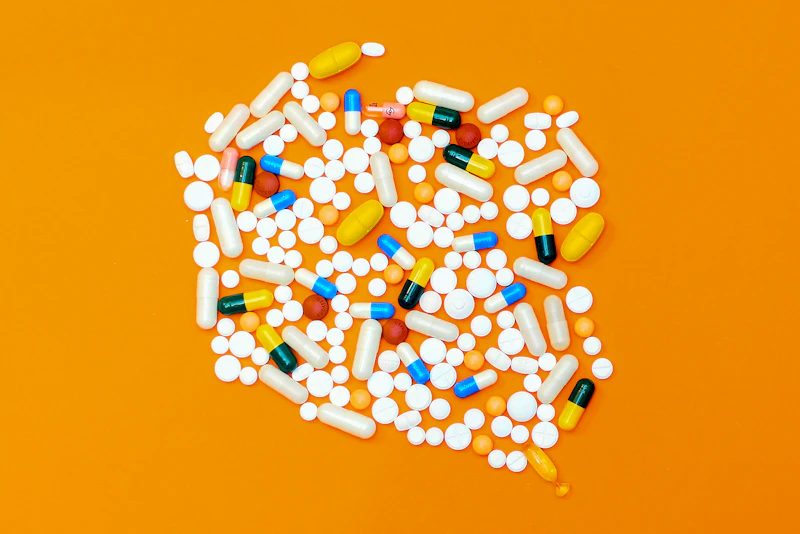
You would logically assume that major multinational pharmaceutical giants are throwing billions into resolving this trillion-dollar problem. The shocking truth? They completely quit. Global giants like AstraZeneca, Sanofi, Novartis, and Eli Lilly have entirely closed or sold off their antibiotic R&D divisions. The development of new antibiotics per decade has plummeted drastically since the 1980s.
Why? Because the antibiotic business model falls flat against two insurmountable walls:
1. The Economics Wall
Developing a single new antibiotic costs upwards of $1.1 billion, yet a company can expect to recoup barely $100 million in sales. Unlike chronic disease medications (e.g., diabetes or blood pressure drugs) which patients consume daily for life, antibiotics are taken for just 5 to 7 days. Furthermore, doctors actively restrict the use of powerful new antibiotics, reserving them exclusively as a last resort to prevent further bacterial mutation. This results in an unprecedented economic paradox: the better your antibiotic product is, the less it will be prescribed and sold.
2. The Biology Wall
The average commercial lifespan of an antibiotic before widespread resistance renders it ineffective is about 20 years. However, due to low sales volume, financial models show that an antibiotic company takes about 23 years just to break even on its original R&D investment. Biology kills the efficacy of the drug before economics can even return the initial capital!
The Indian David vs. The Global Goliaths: Wockhardt’s Bold Bet
Historically, Indian pharma has focused on being excellent "copycats"—reverse-engineering existing drugs to mass-produce cheap generics. But 30 years ago, Habil Khorakiwala, the chairman of Mumbai-based Wockhardt, foresaw the superbug disaster and chose a radically difficult path.
Wockhardt took $800 million of steady revenue generated from its core insulin business and channeled it purely into high-risk antibiotic research. For 27 consecutive years, scientists sat inside a Mumbai lab chasing a drug the rest of the world fled from—a grueling process that nearly pushed the company to bankruptcy twice.

The gamble paid off. Wockhardt successfully developed Zaynich—a novel chemical breakthrough engineered to hunt down and kill the most lethal, unkillable drug-resistant hospital infections on Earth.
While Wockhardt as an entire company is market-valued at around $3 billion, its standalone intellectual property for Zaynich is valued at a whopping $9 billion. Uniquely, while big pharma burns $1.1+ billion on a single molecule, Wockhardt managed to engineer six distinct novel antibiotics for just $800 million. Zaynich has comfortably cleared Phase 3 clinical trials, caught the immediate attention of US and European regulators, and is anticipated to maintain a 15-year global monopoly with zero market competition.
Core Business Lessons from Wockhardt’s 30-Year Strategy
- Execution Makes You Big, R&D Makes You Irreplaceable: Lower manufacturing costs and better margins yield operational growth, but pioneering breakthrough IP builds multi-billion-dollar leverage. True corporate innovation is measured by new streams of revenue that did not exist two years ago.
- The Highest Profits Hide Where Others Fear to Tread: While hundreds of generic manufacturers aggressively competed over shrinking margins, Wockhardt claimed an empty field abandoned by global giants, positioning themselves for a lucrative 15-year monopoly.
- Fund Your Bold Bets with Safe Bets: Wockhardt did not rely on venture capital or grants. They established a boring, predictable, highly stable insulin business across 30+ countries, using that consistent cash flow to finance their high-stakes R&D dream. If you want to bet bold in business, secure your steady cash flow first.
Source / Reference: Case study analyzed via Think School's investigative medical and corporate review.


Comments
Post a Comment